
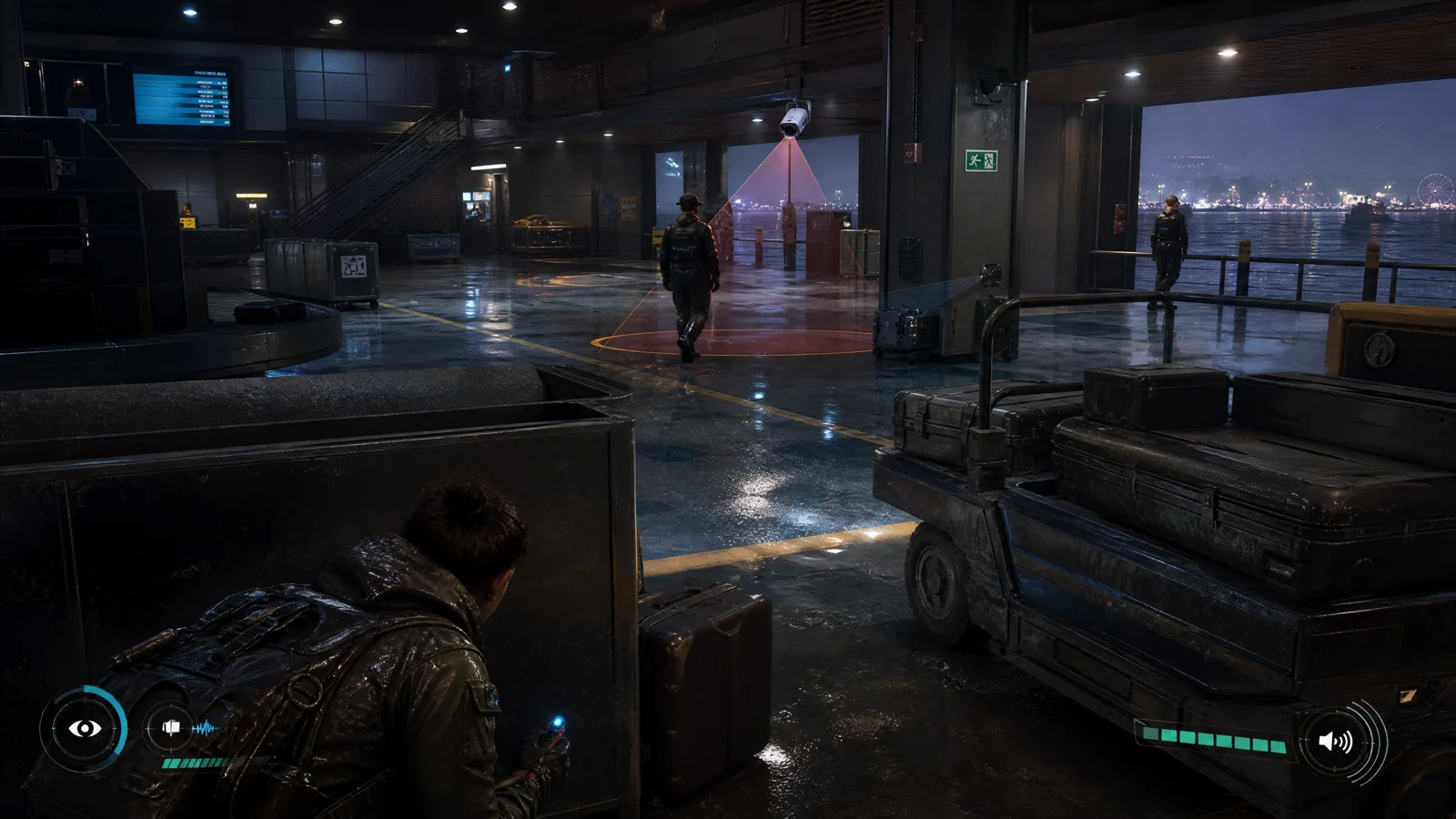
The waterfront never truly sleeps, but when the neon reflects off the rain-slicked concrete of the ferry terminal, it offers just enough shadows for those who know how to use them. Harbourlight Heist is a masterclass in tension, asking players to navigate a sprawling, high-security transport hub without raising the alarm.
Understanding the Infiltration Loop
At its heart, the terminal mission is about patience and observation. You are dropped into a bustling, neon-lit waterfront environment where the primary currency is invisibility. The core loop revolves around studying guard patrol routes, tracking the sweep of security camera cones, and identifying micro-opportunities to slip past unnoticed. The game doesn't hand you a single golden path; instead, it provides a playground of interconnected systems where your decisions dictate the rhythm of the heist. Every step you take behind the humming baggage machinery must be calculated, as a single misstep can trigger a lockdown.
The beauty of this loop lies in its flexibility. While the terminal is heavily fortified, it is also a functioning transport hub, meaning there is a constant ebb and flow of movement that you can exploit. The challenge is not just getting in, but doing so without leaving a trace of your presence. It's a delicate dance of moving from cover to cover, anticipating the next sweep of a camera, and knowing exactly when to hold your breath and stay put.
Mastering Light, Sound, and Disguises
The mechanics governing your survival are deeply intertwined with the environment. Light and sound are your primary concerns. The neon signs that give the terminal its distinct atmosphere also create harsh pools of illumination that you must avoid. Sticking to the shadows is essential, but the dynamic lighting means that safe zones can shift as ferries arrive and depart, casting new shadows and revealing others. Sound plays an equally critical role; sprinting across the terminal floor will immediately draw the attention of nearby guards, whereas a slow, deliberate crouch-walk keeps you off their radar.
Disguise timing adds another layer of complexity. Procuring a worker's uniform grants you temporary access to restricted zones, but it is not a free pass. The longer you linger in the line of sight of a supervisor or a camera, the faster your suspicion meter fills. You must keep moving, breaking line of sight, and blending in with the terminal's natural operations. To aid your infiltration, your kit includes several non-lethal gadgets, such as EMP darts to temporarily disable cameras and noisemakers to redirect guard patrols. Using these tools effectively is key to creating openings when the natural patrol routes offer none.
- Stick to the shadows created by the baggage machinery to avoid the sweeping camera cones.
- Use noisemakers to draw guards away from critical chokepoints near the loading docks.
- Equip disguises only when absolutely necessary, as prolonged exposure will blow your cover.
- Time your movements with the arrival of the ferries to mask the sound of your footsteps.
Navigating the Terminal Layout
The ferry terminal is a sprawling, multi-tiered puzzle box designed to reward exploration and spatial awareness. The ground floor is dominated by the baggage handling systems, a labyrinth of conveyor belts and sorting machinery that provides excellent cover for a third-person infiltrator. Navigating this area requires you to weave between moving luggage, using the bulky suitcases to block the view of patrolling guards. The verticality of the level also comes into play, with maintenance catwalks and ventilation shafts offering alternative routes above the main concourse.
What makes the level design truly shine is the presence of multiple exits. Whether you choose to slip away on a departing cargo vessel, hack the security gates to leave through the main entrance, or rappel down the sea wall to a waiting speedboat, the game accommodates your preferred playstyle. This open-ended approach ensures that no two playthroughs feel exactly the same, as you are constantly discovering new shortcuts and environmental interactions that can turn a seemingly impossible situation to your advantage.
Reading the Neon and the Noise
The visual and audio feedback systems are seamlessly integrated into the terminal's aesthetic, providing crucial information without cluttering the screen with a traditional heads-up display. The neon lighting isn't just for show; it serves as a subtle indicator of your visibility. When you are fully concealed in the shadows, the colour palette cools down, shifting towards deep blues and purples. The moment you step into the light, the harsh glare of the neon cuts through the gloom, immediately signalling that you are exposed to any prying eyes.
Similarly, the audio design is instrumental in helping you track threats. The rhythmic hum of the baggage belts masks the sound of your movement, but it also makes it harder to hear approaching footsteps. The game uses spatial audio brilliantly, allowing you to pinpoint the exact location of a guard just by the sound of their boots on the concrete. The high-pitched whine of a security camera panning in your direction serves as a tense warning, giving you time to duck back behind a crate before the cone of light sweeps over your position.
What Shines and What Stumbles
The strongest aspect of the terminal mission is how organically the mechanics interact with the environment. The interplay between the dynamic lighting, the moving baggage belts, and the strict patrol routes creates a deeply satisfying stealth experience that rewards patience and keen observation. The non-lethal gadgets feel balanced, offering just enough utility to get you out of a tight spot without trivialising the challenge of the infiltration. The sheer variety of approaches and the multiple extraction points make it a highly replayable sandbox.
However, the experience is not without its flaws. The disguise system, while conceptually sound, can sometimes feel a bit overly punitive. The suspicion meter fills incredibly fast on higher difficulties, leaving very little room for error when navigating the more crowded sections of the terminal. Additionally, the AI pathing for the guards occasionally hitches around the more complex machinery, leading to unpredictable movements that can unfairly blow your cover. These minor gripes aside, the core systems remain robust and engaging.
Final Verdict on the Infiltration
Navigating the neon-drenched ferry terminal is a tense, cerebral exercise in stealth that captures the essence of a high-stakes heist. The game successfully blends intricate level design with robust mechanics, forcing you to constantly adapt to shifting patrols and sweeping camera cones. While the disguise system can be unforgiving and the AI occasionally stumbles, the overall experience is a thrilling game of cat and mouse set against a brilliantly realised waterfront backdrop. It demands your full attention and rewards your creativity, making it a standout mission that stealth enthusiasts will want to replay time and time again.