
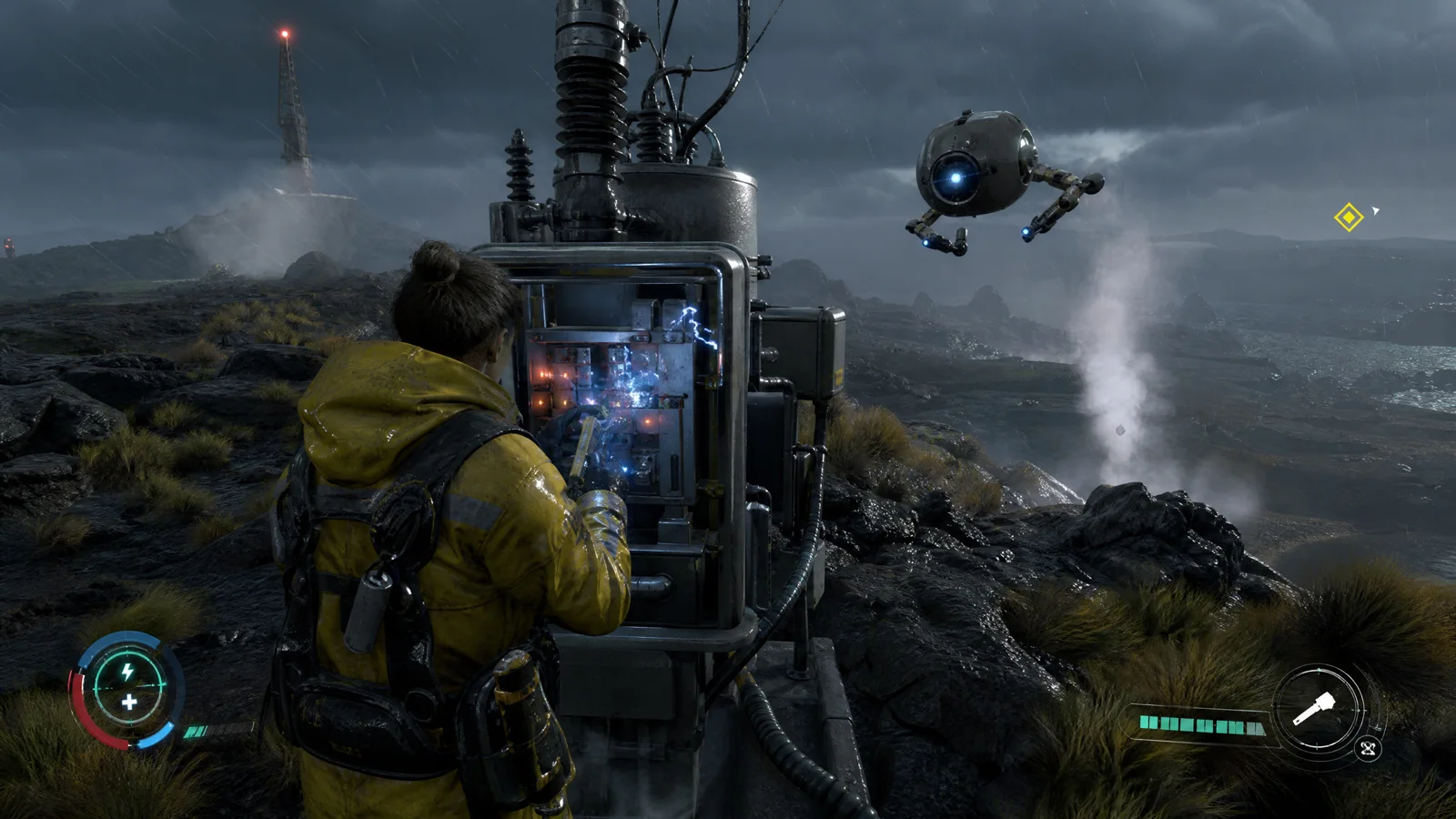
When you step onto the storm-lashed expanse of the Volcanic Plateau in Southern Signal, the hostility of the environment hits you like a southerly buster. This isn't a game about shooting your way out of trouble. Instead, it is a high-pressure engineering action experience where your greatest adversaries are gale-force winds, failing infrastructure, and the relentless ticking of the clock. It rewards meticulous planning, quick thinking, and hard yakka over mindless combat, delivering one of the most uniquely stressful gameplay loops of the year.
Holding the Grid Together
The core loop of Southern Signal revolves around a demanding premise: keeping the regional power grid operational amidst severe weather events. Playing from a third-person perspective as a lone engineer, you venture into the wop-wops to repair sparking geothermal relays, reconnect severed lines, and prevent catastrophic grid failures. It is a constant battle of triage, deciding which faults require immediate attention and which can wait until the storm front passes.
Each mission begins in the safety of your mobile command centre, where you review telemetry data and pack your gear. Space is at a premium, so choosing whether to bring extra portable power cells, diagnostic tools, or structural reinforcement is a critical decision. Out in the field, you battle the elements just as much as failing hardware. Finding shelter from the biting wind to steady your hands before a delicate splice, or using your maintenance drone to scout a safe path up a scree slope, becomes second nature.
Routing Power and Commanding Drones
The mechanical depth of Southern Signal is where it truly shines, transforming a repair simulator into a gripping tactical experience. Routing portable power to bring a dead relay back online isn't just pressing a button; you manually balance the voltage, ensuring you don't overload temporary circuits while diagnosing the primary fault. It is a delicate dance of monitoring gauges and making time-sensitive choices while sparks rain down around you.
Your constant companion is your maintenance drone, affectionately dubbed 'Sparky'. Commanding the drone is seamless, integrated into the shoulder buttons to allow efficient multitasking. You can send the drone to fetch a dropped spanner, illuminate a dark access panel, or act as a temporary windbreak while you work on an exposed relay.
- Tactile Diagnostics: Use a variety of meters to pinpoint faults before attempting a fix.
- Dynamic Weather Interaction: Wind direction and intensity directly affect your movement and repair speed.
- Drone Synergy: Seamlessly issue contextual commands to your drone without interrupting your own actions.
- Resource Management: Balance battery life, spare parts, and your stamina during extended sorties.
The interplay between these systems creates moments of genuine panic and relief. Diagnosing a complex fault while the wind threatens to blow you off the platform, all while your drone frantically tries to keep the area illuminated, is an adrenaline rush few combat-focused games can match.
The Volcanic Plateau
The level design in Southern Signal is a masterclass in practical challenge. The New Zealand volcanic plateau is rendered with stark, brutal beauty. Geothermal vents hiss steam into the freezing air, and crumbling infrastructure clings to the rugged terrain. The maps are sprawling and open, but they are treacherous landscapes that must be navigated with caution.
Missions often require you to traverse significant distances on foot, turning the environment into a puzzle. A direct route might take you across an exposed ridge where the wind drains your stamina, forcing you to seek a sheltered path through a narrow ravine. The verticality of the relay towers adds complexity. Climbing a swaying, ice-covered ladder to reach a sparking transformer is a nerve-wracking experience, especially knowing a single misstep means failure.
The game escalates the stakes brilliantly. Early missions involve simple fuse replacements near base camp, but later assignments have you deep in the bush, trying to bypass a catastrophic failure at a primary geothermal plant while a cyclone bears down. The sense of scale and isolation is palpable, making every successful repair feel like a monumental achievement.
The Roar of the Storm
Visually, the game is a triumph of atmosphere. The weather effects are some of the best in the business. The way rain lashes against your visor, the terrifying arc of a high-voltage spark in the gloom, and the eerie glow of geothermal pools contribute to a deeply immersive experience. The character animations are weighty, conveying the physical effort required to manipulate heavy machinery in a gale.
However, it is the audio design that truly elevates the tension. The oppressive roar of the wind is punctuated by groaning metal and the sharp crackle of uncontained electricity. Your drone whirs and beeps, providing small comfort in the desolate landscape. The sound of a relay humming back to life is incredibly satisfying, serving as a perfect auditory reward for your hard yakka. The voice acting is top-notch, with the protagonist delivering pragmatic observations in a thick, authentic Kiwi accent that grounds the experience.
What Works, What Doesn't, and The Final Verdict
Southern Signal excels at making non-violent gameplay feel incredibly high-stakes. The diagnostic puzzles are challenging but fair, and the satisfaction of bringing a dead grid back online is immense. The drone mechanics are flawlessly implemented, and the environmental hazards are a constant, terrifying presence. It is a game that demands your full attention and rewards methodical, calm thinking under extreme pressure.
If there is a critique to be made, it is that the tutorial segment is a bit sparse. The game throws you into the deep end quickly, and complex diagnostic tools are not explained thoroughly, leading to trial and error in the early hours. Additionally, the inventory management system back at base camp can feel clunky, requiring too many menu screens to sort your gear.
Despite these minor gripes, Southern Signal is a brilliant, stressful, and rewarding experience. It proves that you don't need guns or explosions to create a thrilling action game; sometimes, all you need is a sparking relay, a sturdy spanner, and a ticking clock. It is a brilliant piece of high-pressure engineering action that tests your planning and problem-solving skills to the absolute limit. A must-play for anyone looking for something genuinely different in the PC and console space.